
English follows Japanese
森林育成学分野 鈴木 華実 助教
幼少の頃に読んだ『シートン動物記』をきっかけにオオカミが一番好きな生物となりました。ただ、オオカミが絶滅した日本で研究するのは難しく、大学は森林棲の動物と植物の関係を研究できる理由で決めました。学部4年で研究テーマを決める際、愛知県で120年ぶりにササが開花した直後という偶然から、ササの開花結実、更新に至る過程と様々な動物との関係を探る研究が始まりました。毎週山に通い、米粒のような種子をどのような動物がどのように利用しているのか、種子から発芽した次世代はどんな影響を受けながら成長していくのか、面白い発見を得ました。
2026年、次は長野県で120年ぶりに開花し、様々な分野の研究者と一緒にこの現象の全貌と、その影響解明を目指しています。そして、オオカミに関連した研究も、アメリカの大学の研究グループに参加し2年前から少しずつ進めています。

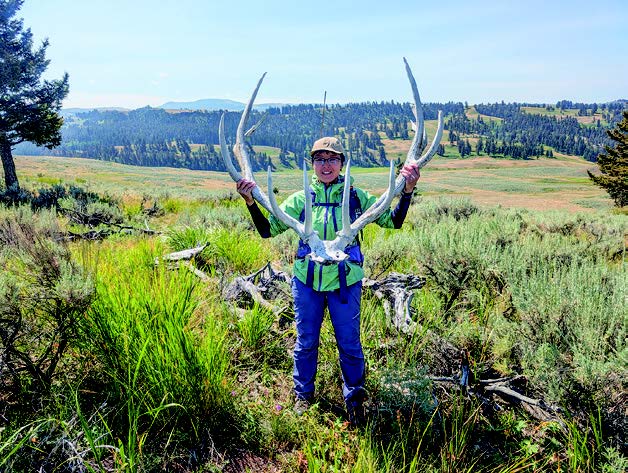
アメリカ合衆国国立公園の調査地にて |
Capturing a rare phenomenon by chance
Laboratory of Silviculture, Assistant Professor, Hanami Suzuki
Wolves have been my favorite animals ever since I read Lobo, the King of Currumpaw as a child. However, because wolves are extinct in Japan, it’s difficult to study them here, so I chose a university where I could study the relationship between animals and plants in forests. When I became a 4th-year student, a chance—the flowering of dwarf bamboo in Aichi for the first time in 120 years—led me to begin a study exploring the process of flowering, seeding, and regeneration, as well as its relationship with various animals. I visited the field every week and made exciting discoveries about who uses these seeds, and what influences the next generation as it grows.
In 2026, dwarf bamboo flowered again in Nagano, and I am now working with researchers from various fields to understand the full phenomenon. Additionally, research on wolves has also begun in collaboration with a research group of an American university.